How the world has changed on my watch
How the world has changed on my watch
- By --
- Monday, 25 Jul, 2022
International relations had resumed a steadier rhythm in January 2007 when I became Director of Chatham House. The aftershock of the 2001 terrorist attacks on the United States and the Bush administration’s contentious responses in Iraq and its ‘global war on terror’ had settled down somewhat.
That year President George W Bush’s second administration was mending fences with its European allies. China’s GDP growth hit a three-decade peak of 14 per cent, and the idea that this could drive a ‘win-win’ economic cycle did not yet grate. Financial regulators had not woken up to the credit crisis that they had enabled. And the European Union was still obsessed with ‘widening versus deepening’, while Britain tried to have its cake and eat it on the sidelines.
With hindsight, 2007 acted as the fulcrum between a cautiously optimistic post-Cold War world and the contested environment we live in today. Russian President Vladimir Putin chose that year’s Munich Security Conference to deliver a tirade against the injustices of a US-led world, with arguments that presaged this year’s invasion of Ukraine.
By the start of 2008, Alan Greenspan’s belief in the rationality of financial markets turned out to be a fallacy as US and European banks imploded. The subsequent economic turmoil, followed by monetary easing and fiscal austerity, sowed the seeds for the populist politics that emerged on both sides of the Atlantic.
Robin Niblett with the Queen, Patron of Chatham House, and Sir John Major
Nevertheless, world leaders did not give up on the promise of international cooperation. The global financial crisis led to the elevation of the G20 as the premier forum for coordinating global economic policy between the world’s major economies.
By 2015, with Barack Obama in the White House, two landmark deals were reached: the Paris Agreement and the Joint Comprehensive Plan of Action, an example of truly global cooperation between all five permanent members of the UN Security Council. The next year, China’s first female chair of the Foreign Affairs Committee of the National People’s Congress, Fu Ying, pointed to a ‘decentralization of world power’ that might lead to a more inclusive world order.
But this sense of relative optimism about the future masked two fundamental changes. The first was the erosion of the cohesion of democratic societies under the pressures of globalization and the aftershocks of the financial crisis.
Instant access to unintermediated and often manipulated information ended up stimulating and polarizing societies in equal measure, deepening the divide between those searching for the certainties of the past and those open to the uncertainties of a more globalized future.
The second change is the end of the global hierarchy that followed the Second World War, in which the US and the West remained at the top, even with the advent of a more polycentric world. This change is driven by several factors, above all the growing economic and technological parity between China and the US, and by America’s schizophrenic response.
The Obama administration sought to restore a more inclusive form of global leadership, but it unwittingly revealed the limits of US power by breaking its red lines over Bashir al-Assad’s use of chemical weapons in Syria and by turning a blind eye to China’s takeover of disputed islands in the South China Sea. Donald Trump’s America First policies then flipped the US into an overbearing version of other self-interested powers. After this zigzagging by the US, leaders in the Middle East have developed their own assertive foreign policies, while two nascent democracies in Southeast Asia, Thailand and Myanmar, are again ruled by military juntas.
EU leaders became obsessed with the idea of strategic autonomy. And, although Joe Biden’s election was welcomed across most of Europe, it could not assuage concerns about the potentially transitory nature of his claim that ‘America is back’.
Putin has seized on this moment of transatlantic uncertainty and post-Covid navel-gazing to try to create a personal legacy as the leader who reunited a greater Russia out of the rubble of the Soviet Union. Instead, he has united Ukrainians and reunited the world’s liberal democracies in opposition to his brutal invasion and blatant rupture of international law. His actions have also drawn the contours of a new, trilateral international system.
Some 40 democracies across North America, Europe and the Indo-Pacific now see Putin and Xi Jinping – given China’s rhetorical support for Putin’s invasion – as interconnected threats to their long-term security. They are organizing to resist, using a re-energized Nato, new structures for Indo-Pacific cooperation and cross-linkages between these two spheres. For their part, Putin and Xi, though not formal allies, are tied together by each one’s need that the other survives and prospers while they are in confrontation with the liberal democracies.
The third, largest and most diverse group of countries are the newly non-aligned. India stands proudly in the foreground, but other major democracies such as Brazil, Indonesia and South Africa, and non-democracies such as Egypt and Vietnam, are triangulating strategically between the world’s dominant democratic and authoritarian poles. Multilateral institutions will be weaker as a result.
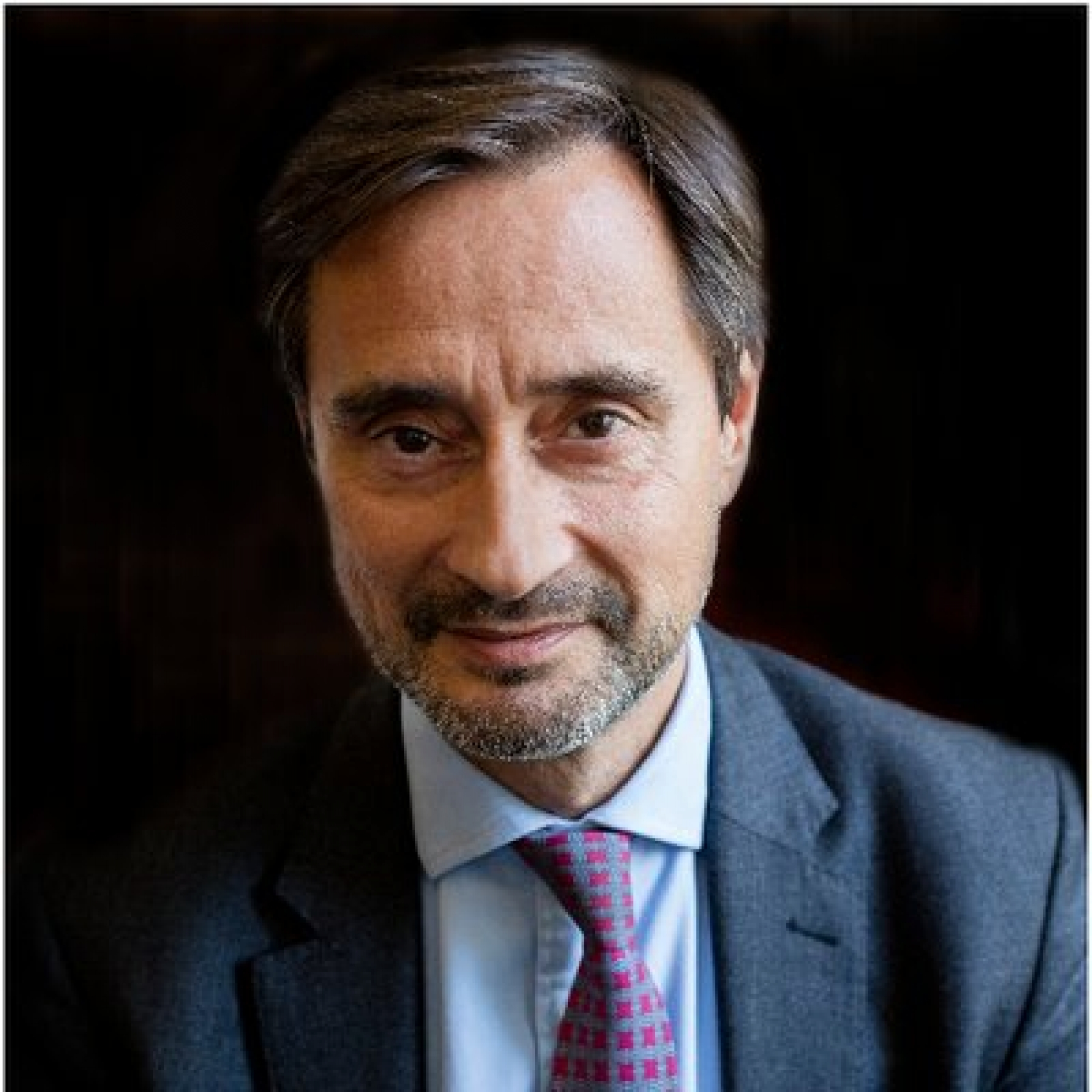
Portrait of Robin Niblett by Sarah Tanat-Jones
Does this more divided world presage major conflict between the great powers. Hopefully not; after all, nuclear weapons remain a potent deterrent. Does global division herald the end of economic globalization and of the international cooperation needed to manage shared global challenges. Not necessarily.
While Russia will be excluded from liberal democratic markets for as long as Putin is in the Kremlin, China’s reliance on global markets and the importance of its market to the world make it unlikely that we will return to a new Cold War. Global supply chains and foreign investment will be more tightly circumscribed than today, but they will persist. And international cooperation to combat climate change and manage the environment will continue.
Meanwhile, technological innovation will accelerate, opening new prospects for sustainable development and employment, even as it sharpens the facets of geopolitical competition. And we may soon cross the tipping point at which women hold a critical mass of positions of political and community leadership in many parts of the world. Given that male leaders are, once again, the instigators of the latest spasms of violence, a more gender-balanced approach to leadership holds the prospect of greater political stability and more inclusive and sustainable development.
As I step down as Chatham House Director, I find myself torn between fury at the senseless human tragedy of a drawn-out war in Ukraine and the way its spillover effects are devastating the welfare of hundreds of millions across the globe, and hope that human courage, resilience and ingenuity will nevertheless sustain us on the path to a better future.
I am reassured in this by the knowledge that Chatham House’s researchers, professional staff and increasingly diverse membership mean that it is well placed to help decision-makers and societies navigate this complex world.
Related News