
Boris Johnson tries to reset leadership with housing pledges
- By --
- Thursday, 09 Jun, 2022

Boris Johnson will set out ideas to boost home ownership in England - including allowing benefits to cover mortgage payments - in a speech aimed at re-launching his leadership.
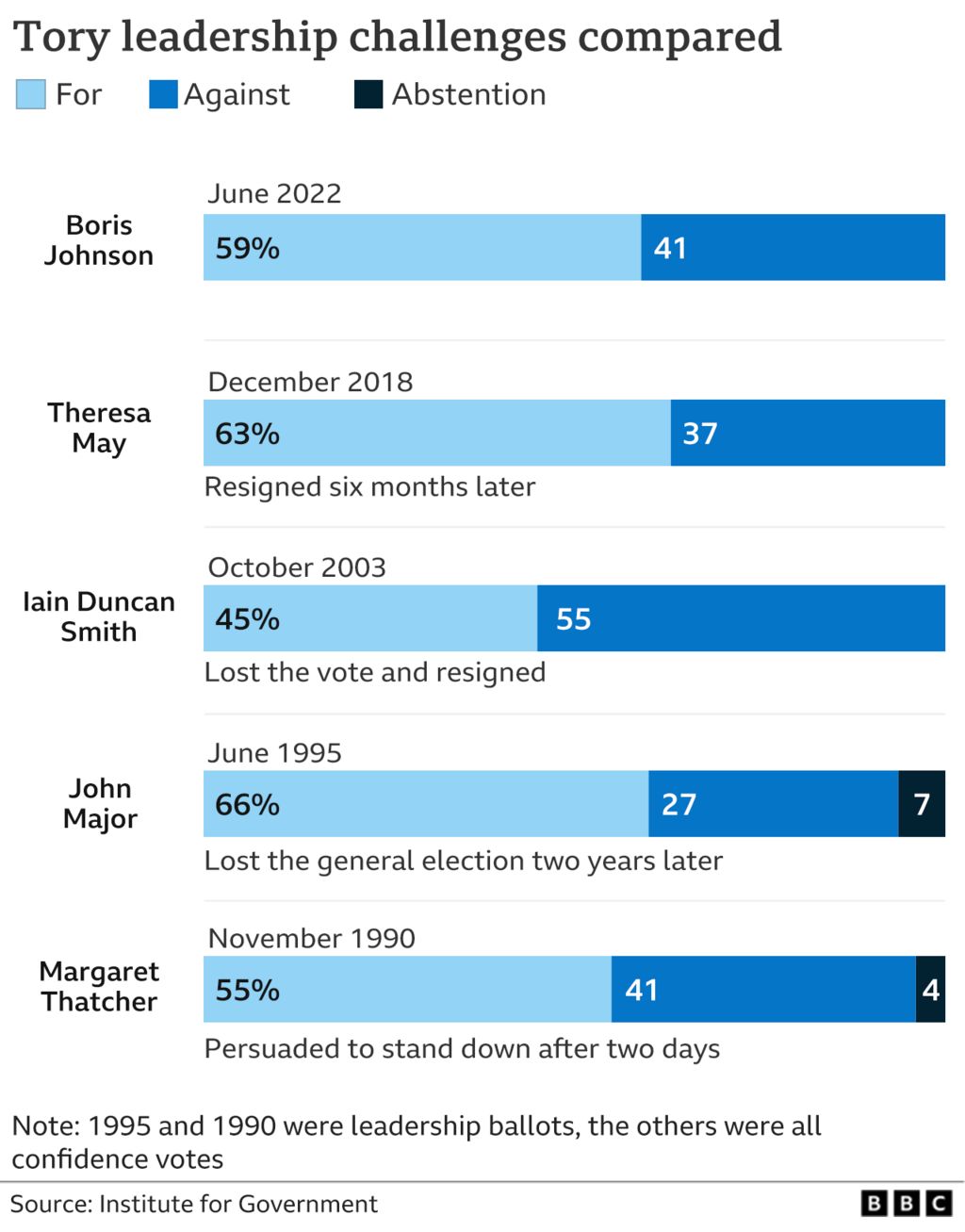
The PM survived a vote among his own MPs to oust him on Monday.
He will restate his commitment to help people get on the housing ladder in a speech in Blackpool.
Labour says he has not thought the proposals through and they would make the housing crisis worse.
Earlier this week, the prime minister saw off an attempt to get rid of him in a confidence vote orchestrated by Tory MPs angry at widespread Covid-rule breaking in Downing Street.
- Under-fire Johnson vows to get on with the job
- How safe is Boris Johnson's job now?
- Is the government meeting its new-homes target?
In a wide-ranging speech, he will seek to reset his premiership to show he has not run out of ideas and is focused on issues that matter most to voters.
According to extracts released by No 10, he will promise further measures "over the next few weeks" on living costs, amid 40-year high inflation driven by increases in energy costs.
The PM will add: "We have the tools we need to get on top of rising prices. The global headwinds are strong. But our engines are stronger.
"And, while it's not going to be quick or easy, you can be confident that things will get better, that we will emerge from this a strong country with a healthy economy."
He will restate the government's commitment to extending the "right to buy" to housing association tenants.
In his speech, Mr Johnson will also suggest that housing benefit could count to towards mortgage payments, although no details of how such a policy would work have been released.
Housing benefits, which help low-income or unemployed people pay their rent, cost the government around £30bn a year, a large proportion of which goes to private landlords. A person is not usually eligible for housing benefit if they have a mortgage.
Labour's shadow levelling up secretary Lisa Nandy told Sky News: "In principle, it's a great idea to try to get more people the security of their own home, particularly people who find themselves in the benefits system.
"The problem is that, as always, the government has not thought through the detail.
"There's no sign that any of the lenders are on board with this."
She added that to qualify for universal credit, which includes housing benefit, people need savings of less than £16,000, which means most of those that would be helped by the policy would not have "anything near the amount that they need for a deposit on a home".
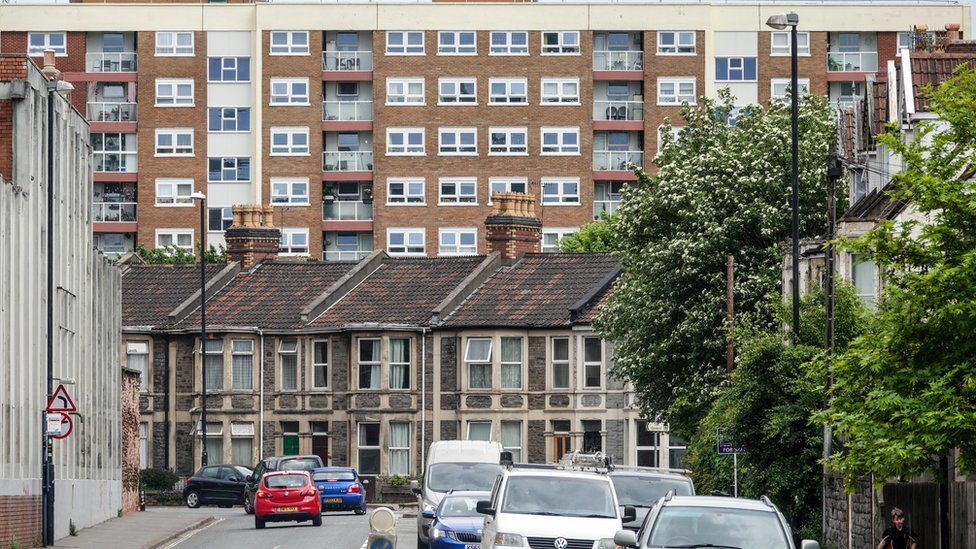
About two million council homes in England have been sold under right to buy since 1980
Council tenants in England have been able to buy their homes at a discount since October 1980, when the policy was introduced under former Conservative prime minister Margaret Thatcher.
But the same is not true for people who rent from housing associations, unless their property was once owned by a local authority and they lived in it during this period.
It's not entirely clear how the government's right-to-buy policy is going to work:
- There is already a shortage of social housing without selling properties - 1.1 million people are on waiting lists
- The government has not revealed who will be able to take advantage of the scheme, how much it will cost and whether it will be capped
- It's the third such pilot scheme - previous ones found that some housing association properties were not eligible to be sold and there was concern about the financial risks being taken on by participants
- While the government has said that there will be funding for housing associations to replace each home sold, previous pilots have had problems with replacements coming quickly enough or being like-for-like
- The policy depends on negotiations with housing associations, which will not necessarily want to take part.
When challenged on the success of the pilot schemes, Levelling-Up Secretary Michael Gove insisted they had shown how the policy can be rolled out nationwide.
And he claimed new social housing would be produced "instantly" to replace homes bought by low-earners.
Polly Neate, chief executive of housing charity Shelter, described the prime minister's housing proposals as "baffling, unworkable, and a dangerous gimmick".
Extending the right-to-buy would "put our rapidly shrinking supply of social homes at even greater risk," she added.
"For decades the promise to replace every social home sold off through right to buy has flopped. If these plans progress we will remain stuck in the same destructive cycle."
Related News


